
The Second Middle Passage
It has never been hard to imagine the Middle Passage. Moans, screams, vomit, excrement, despair and visions and plans of righteous revolt were all elements of the opening act of our sojourn in the North American wilderness. The image of our ancestors laid out end-to-end in the slaving vessels has become a symbol of horror that rivals the noose as an icon of physical terror.
The outlawing of the Atlantic slave trade in 1808 set forces in motion that once again tore our families apart, this time wrenching mothers, fathers, and children from the Upper South—Maryland, Virginia, the Carolinas, and parts of Georgia –to the lower South--Louisiana, Texas, Mississippi, Alabama and southwest Georgia.
This internal slave trade, now cut off from sources of new Africans from the Continent, sparked smuggling and kidnapping as well as legal sales of our ancestors. Twelve Years a Slave, Solomon Northup’s tale of being kidnapped and sold “down the river,” as it were, described a clear and present danger to free black people. This trade became “big business in the slaveholding states.”[1] Solomon Northup eventually regained his freedom, but those of our ancestors who were legally enslaved had no such relief.
“One third of first marriages were disrupted by the interstate slave trade, and many more were broken apart by temporary loans and long-term hiring out. The southwestern frontier became a place for the very young and slightly more male population. The sugar plantations in Louisiana employed mostly men because of the exacting labor required to grow and process the crop.”[2]
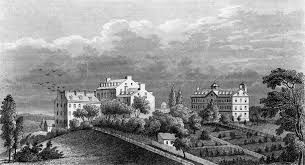
Georgetown University’s sale of 272 enslaved Africans from their Maryland plantations to pay University debts may come to symbolize the physical terror of the Second Middle Passage. Accounts of the sale offer some of the most graphic details yet about what happened to our ancestors during The Second Middle Passage. The Georgetown memorandum http://slaveryarchive.georgetown.edu/items/show/95) laying out the pros and cons of selling those 272 people, written in 1836, is worth reading in its entirety. But one paragraph, in particular, gives a contemporaneous account of how people felt about what was happening:
“Regarding the moral effect of the proposed measure [i.e. the sale of the slaves], there is, in general, a great repugnance among the blacks of Maryland towards being sold and transported to the South. Without doubt, our best slaves, those who have religious sentiments (and indeed there are some!), would be in despair to see themselves ripped away from their former manors, from their old churches…. Is it not cruel, this idea to force them to depart with new masters?”[3]
Cornelius Hawkins was 13 years old when he was swept into the Second Middle Passage. He, like many others of the Georgetown 272, was sold away from his family.
“Some children were sold without their parents, records show, and slaves were “dragged off by force to the ship,” the Rev. Thomas Lilly reported. Others, including two of Cornelius’s uncles, ran away before they could be captured.”[4]
In 2016, when Cornelius Hawkins’ great great granddaughter Maxine Crump was told of his fate, she was stunned. “Oh my God. Oh my God,” she said.
Every family has ordinary people whose stories deserve to be known, celebrated, and shared. We are Lift Every Voice LLC, and we do stories. Find out how we can tell your family story at www.lifteveryvoicellc.com.
[1] Tera W. Hunter, Bound in Wedlock: Slave and Free Black Marriage in the Nineteenth Century (Cambridge, Massachusetts ; London, England: Belknap Press: An Imprint of Harvard University Press, 2017), 25.
[2] Ibid., 26.
[3] Archivum Romanum Societatis Iesu, “‘Is it expedient to sell these 300 slaves?’: The Dubuisson Memorandum, 1836” (Georgetown Slavery Archive, 1836), http://slaveryarchive.georgetown.edu/items/show/95.
[4] Rachel L. Swarns, “272 Slaves Were Sold to Save Georgetown. What Does It Owe Their Descendants?,” The New York Times, April 16, 2016, sec. U.S., A1, https://www.nytimes.com/2016/04/17/us/georgetown-university-search-for-slave-descendants.html.

Comments